
Why WebM outperforms MP4 for web video: better compression, broad browser compatibility, and a significant positive impact on overall site performance.
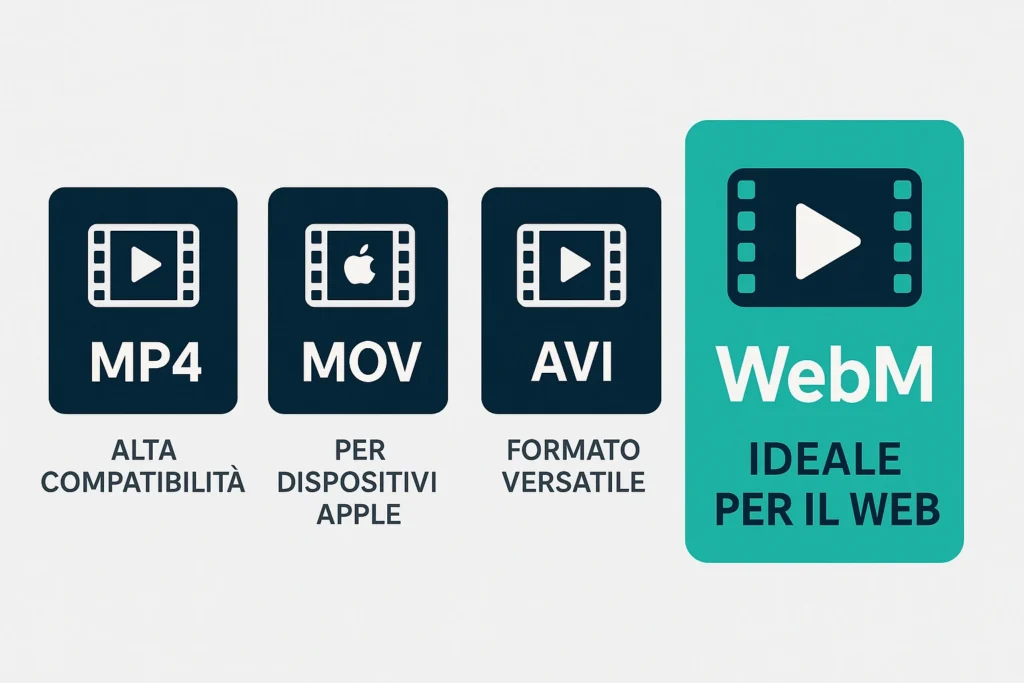
Videos are today one of the most engaging and effective elements for capturing users' attention online. With over 80% of global internet traffic consisting of video content, optimizing these elements for the web has become fundamental to the success of any digital project. But which format to choose to guarantee optimal performance, compatibility, and loading speed? The answer is the WebM format.
The Importance of Videos on Modern Websites
Engagement and Conversions
Videos increase the time users spend on a web page by up to 260% compared to text content. This statistic is not coincidental: the human brain processes visual information 60,000 times faster than text, making videos an extremely powerful communication tool for:
-
Presenting products and services in an engaging way
-
Explaining complex concepts through tutorials and demos
-
Telling company stories that create emotional connection
-
Increasing conversions by up to 85% on landing pages
SEO Benefits of Video Content
Google favors websites that offer quality multimedia content. Properly optimized videos can:
-
Improve ranking in SERPs (Search Engine Results Pages)
-
Increase the likelihood of appearing in rich snippets
-
Generate natural backlinks from other sites
-
Reduce bounce rate and increase session time
The Problem with Traditional Video Formats
Limitations of MP4 and Other Formats
Although MP4 is widely supported, it has some significant limitations:
File size: MP4 videos tend to be heavier, negatively impacting loading times Limited compression: Doesn't use advanced compression algorithms like those available in more modern formats Impact on speed: Larger files mean longer loading times, penalizing user experience and SEO ranking
The Importance of Loading Speed
Loading speed has become a crucial ranking factor for Google, as confirmed in the Page Experience algorithm updates. According to Think with Google studies:
-
47% of users expect a web page to load in less than 2 seconds
-
A 1-second delay in loading can reduce conversions by 7%
-
Google penalizes slow sites in mobile and desktop search results
WebM: The Video Format of the Future
What is the WebM Format
WebM is an open video format developed by Google, specifically designed for the modern web. As described in the official Google documentation, it uses advanced codecs like VP8, VP9, and the latest AV1 to guarantee:
Superior compression: Files up to 35% smaller than MP4 at equal quality Excellent quality: Maintaining visual quality even with reduced bitrates Growing compatibility: Native support in all modern browsers
Technical Advantages of WebM
Advanced Compression
The VP9 codec used in WebM files offers superior performance:
-
File size reduction of 20-50% compared to H.264
-
Better handling of details in complex scenes
-
Lossless compression algorithms for specific content
Optimized Web Performance
WebM was designed specifically for web streaming:
-
Adaptive bitrate: Automatic quality adjustment based on connection
-
Fast seeking: Quick navigation within the video
-
Low latency: Reduced buffering times
Browser Compatibility
Support for WebM is now universal, as confirmed by Can I Use data:
-
Chrome: Full support since 2010
-
Firefox: Native compatibility
-
Safari: Support from iOS 14.2 and macOS Big Sur
-
Edge: Full support in the modern version
According to updated browser usage statistics, this guarantees coverage for over 95% of global web users.
SEO Impact of the WebM Format
Core Web Vitals and WebM
Google introduced Core Web Vitals as fundamental metrics for ranking, as explained in detail in the official Google PageSpeed documentation. WebM contributes positively to:
Largest Contentful Paint (LCP): Smaller files load faster First Input Delay (FID): Fewer resources needed for rendering Cumulative Layout Shift (CLS): Progressive loading without layout jumps
Technical SEO Optimization
Using WebM brings direct benefits to technical SEO:
-
Reduced bandwidth usage: Lower bandwidth consumption
-
Improved mobile performance: Optimized mobile experience
-
Better user signals: Superior engagement metrics
-
Lower bounce rate: Users more satisfied with speed
WebM Implementation Strategies
Best Practices for Optimization
Fallback Strategy
Always implement a fallback strategy to ensure universal compatibility:
<video controls>
  <source src="video.webm" type="video/webm">
  <source src="video.mp4" type="video/mp4">
  Your browser does not support the video tag.
</video>
Size Optimization
To maximize the benefits of WebM format:
-
Use appropriate resolutions for the context of use
-
Balance quality and file size
-
Implement different versions for different devices
Schema Markup for Video
Use structured markup following Schema.org guidelines and Google best practices to help Google understand video content:
{
  "@context": "https://schema.org",
  "@type": "VideoObject",
  "name": "Video Title",
  "description": "SEO-optimized description",
  "contentUrl": "https://example.com/video.webm",
  "encodingFormat": "WebM"
}
Conversion Tools: The Professional Solution
Why Use a Professional Converter
Converting to WebM requires specialized tools to:
-
Preserve video quality during transcoding
-
Optimize compression parameters for the web
-
Handle file batches for large projects
-
Maintain metadata important for SEO
Features of SpeedTest.it's WebM Video Converter
The new WebM video converter from SpeedTest.it offers professional features to optimize your video content:
High-quality conversion: Advanced algorithms to preserve original quality Batch processing: Convert multiple files simultaneously Customizable settings: Full control over bitrate, resolution, and codec Real-time preview: View the result before the final conversion Web-optimized output: Pre-configured parameters for optimal web performance
Specific Use Cases for WebM
E-commerce and Product Videos
In the e-commerce sector, product videos in WebM format offer:
-
Faster loading of product galleries
-
Better mobile experience for shopping
-
Reduced cart abandonment caused by slowness
Content Marketing and Educational
For educational content and marketing, WebM allows:
-
Efficient distribution of tutorials and webinars
-
Smooth streaming of long-form content
-
Improved accessibility on slow connections
Corporate and Institutional
Business websites benefit from WebM for:
-
More professional company presentations
-
More effective digital onboarding
-
Optimized internal communication
Performance Metrics and Monitoring
KPIs to Monitor
After implementing WebM videos, monitor:
Performance Metrics:
-
Page loading time
-
Time to First Byte (TTFB)
-
Speed Index
User Engagement:
-
Time spent on page
-
Bounce rate
-
Video completion rate
SEO Metrics:
-
Target keyword ranking
-
Click-through rate from search results
-
Impressions in video rich snippets
Analysis Tools
Use professional tools to monitor the impact:
-
Google PageSpeed Insights for Core Web Vitals
-
Google Analytics for engagement metrics
-
Google Search Console for SEO performance
-
GTmetrix for detailed performance analysis
Future of Web Video and WebM
Technological Evolution
The WebM format continues to evolve with the support of the Alliance for Open Media project, which develops new technologies like:
AV1 Codec: New generation of video compression documented by Google HDR Support: Support for high dynamic range content 8K Resolution: Preparation for ultra-high resolutions
Full technical specifications are available in the MDN Web Docs documentation for WebM and its codecs.
Enterprise Adoption
Large companies are massively adopting WebM to:
-
Reduce bandwidth costs
-
Improve the global user experience
-
Optimize performance on mobile devices
Conclusions and Recommendations
Adopting the WebM format for videos on websites is no longer an optional choice, but a strategic necessity to remain competitive in today's digital landscape. The benefits in terms of performance, SEO, and user experience are clear and measurable.
Immediate Action Items
-
Audit existing video content to identify optimization opportunities
-
Gradual implementation of WebM format on the most important content
-
Use professional tools like the SpeedTest.it WebM video converter
-
Constant monitoring of performance and SEO metrics
Investing in the Future
Choosing WebM today means investing in a technology that will continue to evolve and improve. With native support in all major browsers and Google's endorsement, WebM represents the present and future of optimized web video content.
The speed, quality, and efficiency of WebM make it the ideal choice for any web project that aims for technical excellence and success in search engines. Don't wait for the competition to overtake you: start the transition today toward a faster, more performant web with optimized WebM videos.
← All articles